
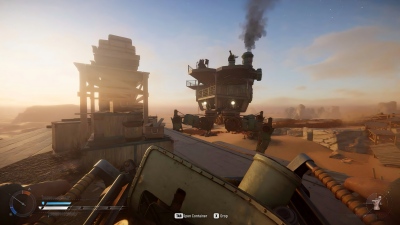
SAND: Raiders of Sophie is easiest to misunderstand when you treat it like a normal extraction shooter. Your gun matters, but your Trampler, route discipline, crew communication, and willingness to leave early matter more. In the live game, the smartest first goal is not a perfect raid. It is a stable raid: spawn in, move with a plan, learn one POI, extract something useful, and avoid turning every sound into a fight.
Who This Guide Is For
This guide is written for new raiders who are struggling with the current game reality: PvP pressure, team-focused systems, rough solo workload, and the feeling that one bad decision can erase twenty minutes of preparation. It avoids patch-sensitive damage values and focuses on decisions that stay useful even when balance changes.
Core Rule: Plan One Small Win
Your first stable runs should have one clear objective. Pick a nearby ruin, wreck, fort edge, or resource route; decide what counts as enough loot; then leave before the run becomes loud. The common beginner mistake is trying to learn driving, scouting, looting, Trampler power, PvP, and extraction all in the same greedy route.
- Good first objective: reach one POI, loot for a short window, return to the Trampler, and extract.
- Bad first objective: chase every signal, push toward distant combat, fill every slot, then look for extraction under pressure.
- Best mindset: every run should answer one question about the game, not solve the whole game at once.
Pre-Raid Checklist
Most failed early raids start before Sophie. Use the hangar like a launch checklist, not a lobby timer. If you forget fuel, shells, food, or a role assignment, the raid starts unstable before the first enemy appears.
| Check | Why It Matters | Reference |
|---|---|---|
| Energy rods | The Trampler is your mobile base. If power planning fails, every other plan becomes harder. | NZ Mk2 Energy Rod |
| Mounted weapon kit | Cannons and shells should be packed before launch, then installed and loaded after landing. | Mounted Weapons |
| Personal weapon and ammo | You need a fallback when boarding, looting buildings, or defending extraction on foot. | Weapons Wiki |
| Food or healing | A small recovery item can turn a failed skirmish into a retreat instead of a wipe. | Canned Food |
| Exit plan | You should know the likely extraction direction before the first fight starts. | Map & Locations |
Choose a Route That Can Survive Interruption
A good beginner route has a clean retreat path. Avoid routes that force your Trampler into awkward turns, expose your engine smoke for too long, or require the whole crew to scatter far away from the vehicle. In SAND, distance from the Trampler is a risk budget. Spend it only when the loot or information is worth it.
Route priorities for early runs
- Stop near cover or terrain that breaks line of sight instead of parking in the most visible open lane.
- Send one player to scout or loot while another watches the Trampler if you are in a duo or squad.
- Do not spend more time at a POI just because the first boxes were good. Good loot is a reason to leave, not a reason to get louder.
- Return to cargo before pushing a second objective. Loot in your backpack is still exposed; loot in the Trampler is closer to becoming progress.
Solo Play: Reduce the Number of Jobs
Solo is possible, but it is demanding because one player must drive, listen, loot, fight, repair, and extract. The answer is not to play faster. The answer is to reduce the number of simultaneous problems. Use shorter routes, avoid unnecessary cannon fights, and treat every stop as temporary.
If you are solo, your best early goal is information. Learn how long it takes to start the Trampler, how far you can safely loot before returning, what sounds indicate nearby crews, and how much exposure an extraction attempt creates. Solo players should often leave with partial value instead of staying for perfect value.
PvP Awareness Without Chasing Every Fight
SAND rewards aggression when a crew is ready, but new players often confuse noise with opportunity. A cannon fight in the distance might be weakened enemies, or it might be a better crew using the fight to bait third parties. Before moving toward combat, ask what you gain if the fight is real and what you lose if it is bait.
- Move toward fights when your Trampler has fuel, your route has cover, and your cargo is not already worth extracting.
- Move away from fights when your crew is split, your Trampler is damaged, your cargo is valuable, or extraction is already nearby.
- Hold position when you hear movement but do not yet know whether it is a Trampler, infantry, or AI pressure.
Extraction Discipline
Extraction is not the end screen. It is another contested phase of the raid. Expect nearby players to notice movement, smoke, sound, or timing. Arrive with enough fuel and health to reposition if the first extraction becomes unsafe. If your Trampler is carrying meaningful value, your job is to leave, not prove you can win one more fight.
Use this extraction test
Before calling extraction, answer three questions: Can we defend this angle for the timer? Can we move if another Trampler appears? Is the loot already worth leaving with? If the answer to two of those is no, reposition or reduce risk before committing.
What to Upgrade First
Early unlocks should support stability. A larger plan belongs in the Tech Tree Database, but the first practical priority is simple: keep the Trampler moving, carry enough value to justify extraction, and bring enough firepower to discourage easy pressure.
- Godlewski path: useful when you want better chassis, reactor, movement, and crew reliability.
- Kaiser path: useful when your raids fail because cargo or mounted firepower is too limited.
- Landwehr path: useful when your crew is regularly forced into boarding, defense, and PvP pressure.
Common Beginner Mistakes
The live game can still feel uneven from session to session. Do not let one unstable run teach the wrong lesson. Separate technical frustration from tactical mistakes. If the server feels rough, choose shorter routes. If the route failed because you overextended, change the route. If the fight failed because your crew had no roles, fix communication before blaming the weapon.
- Leaving the Trampler exposed while everyone loots indoors.
- Using every resource pickup as a reason to continue instead of a reason to extract.
- Driving toward cannon fire without a retreat path.
- Starting extraction before checking fuel, angles, and nearby sound cues.
- Trying to solo with a squad route instead of a solo route.
Simple First-Run Plan
For a clean first session, prepare fuel, a basic weapon, matching ammo, and one recovery item. Pick one nearby POI. Park with a retreat path. Loot for a short window. Return to cargo. Leave when you have enough value to care about losing it. After the raid, write down what actually caused risk: route, fuel, noise, fight choice, extraction timing, or crew roles. That note is more useful than one extra box.
Final Advice
SAND is at its best when the Trampler feels like a moving plan instead of a moving backpack. Treat every upgrade, route, and fight as part of that plan. The strongest new players are not the ones who win every fight; they are the ones who learn which fights are worth reaching and which ones should be left behind in the dust.